
Many coffee professionals assume that using the same beans, grinder, and recipe will always produce the same cup of coffee.

However, there is another critical factor hidden inside the machine:
the pump.
A pump is not just responsible for moving water. It determines:
• how pressure builds during coffee extraction
• how stable the water flow remains
• whether extraction curves can be reproduced consistently
Because of this, even when the same brewing parameters are used, changing the pump type can significantly influence coffee flavor, body, and extraction stability.
In this article, we explore from an engineering perspective how different coffee machine pumps affect coffee extraction and how to select the right pump technology for different applications.
Quick Answer: Does the Pump Affect Coffee Flavor?
Yes.
Different coffee machine pump technologies create different pressure behaviors and flow dynamics, which directly influence coffee extraction.
For example:
• Vibratory pumps generate pulsed pressure with gradual build-up
• Rotary vane pumps deliver stable and continuous pressure
• Gear pumps enable programmable flow and pressure control
These differences can affect pre-infusion, channeling risk, extraction balance, and flavor clarity.
Modern coffee machines typically use three main pump technologies:
• Vibratory pumps
• Rotary vane pumps
• Gear pumps
Each technology differs in structure, cost, stability, and extraction performance, and each can subtly influence the final coffee flavor.
Vibratory pumps are commonly used in entry-level and home coffee machines, especially models with built-in water tanks.
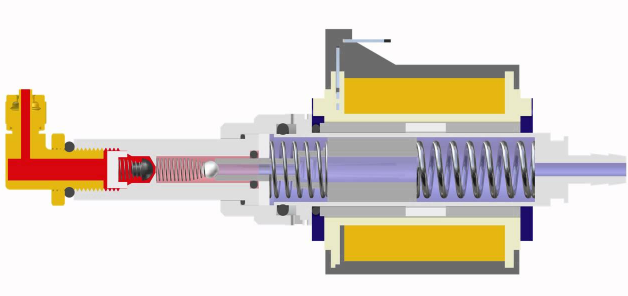
How Vibratory Pumps Work
An electromagnetic coil drives a piston back and forth at 50–60 Hz, producing pulsed water flow through the system.
Key Characteristics
• Gradual pressure build-up
• Noticeable pressure and flow pulsation
• Single-pressure operation controlled by an OPV (over-pressure valve)
• Compact size and low manufacturing cost
Impact on Coffee Extraction
The slower pressure ramp can create a form of passive pre-infusion, where low-pressure water gently saturates the coffee grounds before full extraction begins.
This behavior can help compensate for small inconsistencies in coffee puck preparation.
However, once maximum pressure is reached, the pulsation of the pump may cause less stable extraction toward the end of the brewing process, which can sometimes introduce bitterness or reduce flavor clarity.
Best suited for
• Home coffee machines
• Budget-friendly equipment
• Moderate daily use
Rotary vane pumps are widely used in commercial coffee machines and high-end home systems.
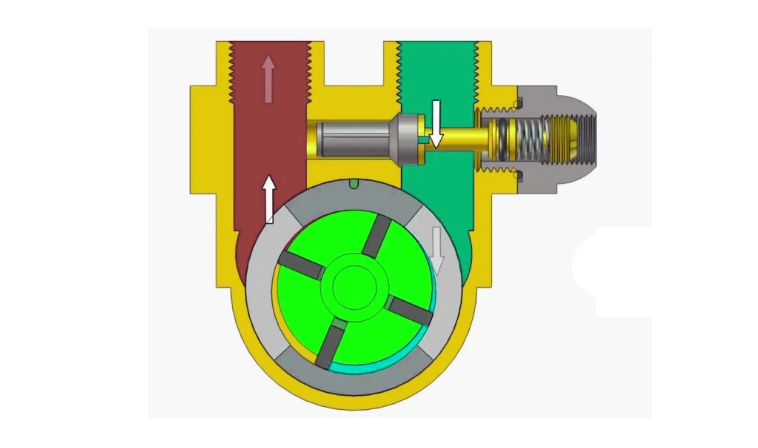
How Rotary Vane Pumps Work
A motor drives rotating vanes that continuously draw water into the pump and quickly build stable pressure.
Key Characteristics
• Fast pressure ramp-up
• Highly stable pressure output
• Quiet operation
• Suitable for continuous brewing
• Compatible with direct water line connection
Impact on Coffee Extraction
Rotary pumps provide consistent pressure throughout the extraction process, resulting in coffee with smoother body and greater flavor consistency.
The stable pressure helps reduce the likelihood of channeling, which is particularly important in high-volume environments such as cafés.
However, because pressure builds quickly, puck preparation flaws may become more noticeable if the machine lacks proper pre-infusion control.
Best suited for
• Coffee shops
• Professional brewing environments
• High-volume coffee preparation
Gear pumps represent a more advanced design focused on precision control and repeatable extraction.
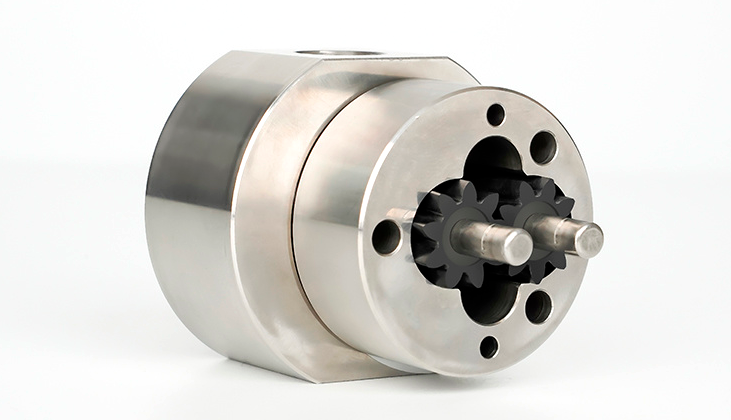
How Gear Pumps Work
Two precision-machined gears rotate with extremely tight tolerances. Pump speed directly determines flow rate, while sensors and electronic feedback systems allow dynamic pressure regulation.
Key Characteristics
• Ultra-low pulsation
• Highly linear flow control
• Programmable pressure and flow curves
• Excellent shot-to-shot repeatability
• Sensitive to water quality and dry running
Impact on Coffee Extraction
Gear pumps make it possible to implement true pressure and flow profiling.
For example:
• low-flow pre-infusion improves saturation of coffee grounds
• stable mid-extraction flow ensures even dissolution
• reduced pressure toward the end helps prevent over-extraction
This level of control can produce cleaner, brighter, and more consistent coffee flavor.
For specialty coffee equipment and advanced automatic machines, gear pumps provide significant advantages in flavor reproducibility.
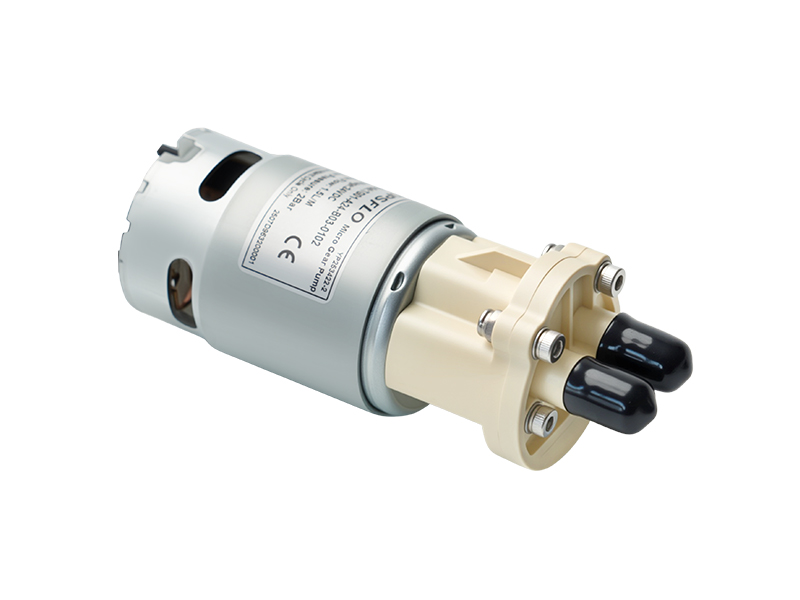
Micro gear pumps are increasingly used in high-end fully automatic coffee machines where consistent flavor and precise control are critical.
For example, pumps such as the TOPSFLO gear pump are designed specifically for commercial automatic machines.
 |
 |
Typical features include:
Ultra-low pulsation for stable extraction
Programmable pressure and flow control
High-pressure sealing for continuous operation
Food-safe materials compliant with NSF, FDA, and LFGB standards
Dead-zone-free internal flow paths to reduce residue buildup
EMC-compliant motor design to minimize interference in complex electronics
These characteristics support consistent flavor delivery and long-term operational reliability.
| Pump Type | Potential Issues | Advantages |
|---|---|---|
| Vibratory Pumps | • Overheating during dry running
• Scale buildup inside the pump • OPV (Over-Pressure Valve) instability |
• Low cost
• Easy to replace |
| Rotary Vane Pumps | • Cavitation caused by unstable inlet pressure
• Seal wear over time |
• Long service life when properly maintained |
| Gear Pumps | • Sensitive to particle contamination
• Cannot tolerate dry running |
• Clean water supply
• Reliable dry-run protection |
The best pump depends on machine design, application, and desired coffee flavor profile.
Home Coffee Machines
Vibratory pumps remain a compact and economical solution.
Commercial Coffee Equipment
Rotary pumps provide stable pressure and reliable continuous performance.
Specialty Coffee and Advanced Automation
Gear pumps enable precise flow control and programmable pressure curves, improving flavor repeatability and brewing consistency.
Final Thoughts
Although hidden inside the machine, the pump plays a crucial role in coffee extraction.
It determines pressure stability, flow dynamics, and repeatability, all of which influence the final cup.
Choosing the right pump is not only an engineering decision.
It is also a decision about coffee flavor.
FAQ
Does a coffee machine pump affect coffee flavor?
Yes. Pump type influences pressure stability and water flow behavior, both of which directly affect coffee extraction and flavor clarity.
What pump is commonly used in home coffee machines?
Most home coffee machines use vibratory pumps because they are compact and cost-effective.
Why do commercial coffee machines use rotary pumps?
Rotary pumps provide stable pressure, quiet operation, and reliable performance during continuous brewing.
What advantages do gear pumps provide in coffee machines?
Gear pumps allow precise flow control and programmable pressure profiles, improving extraction consistency and coffee flavor repeatability.
How Coffee Machine Pumps Affect Coffee Flavor Many coffee professionals assume that using the same beans, grinder, and …
Pump, the core power system of coffee machine, is crucial for ensuring the smooth flow of water and milk during the bre…